Can You Install Rubber Gym Flooring Over Carpet? Expert Tips and Complete Guide
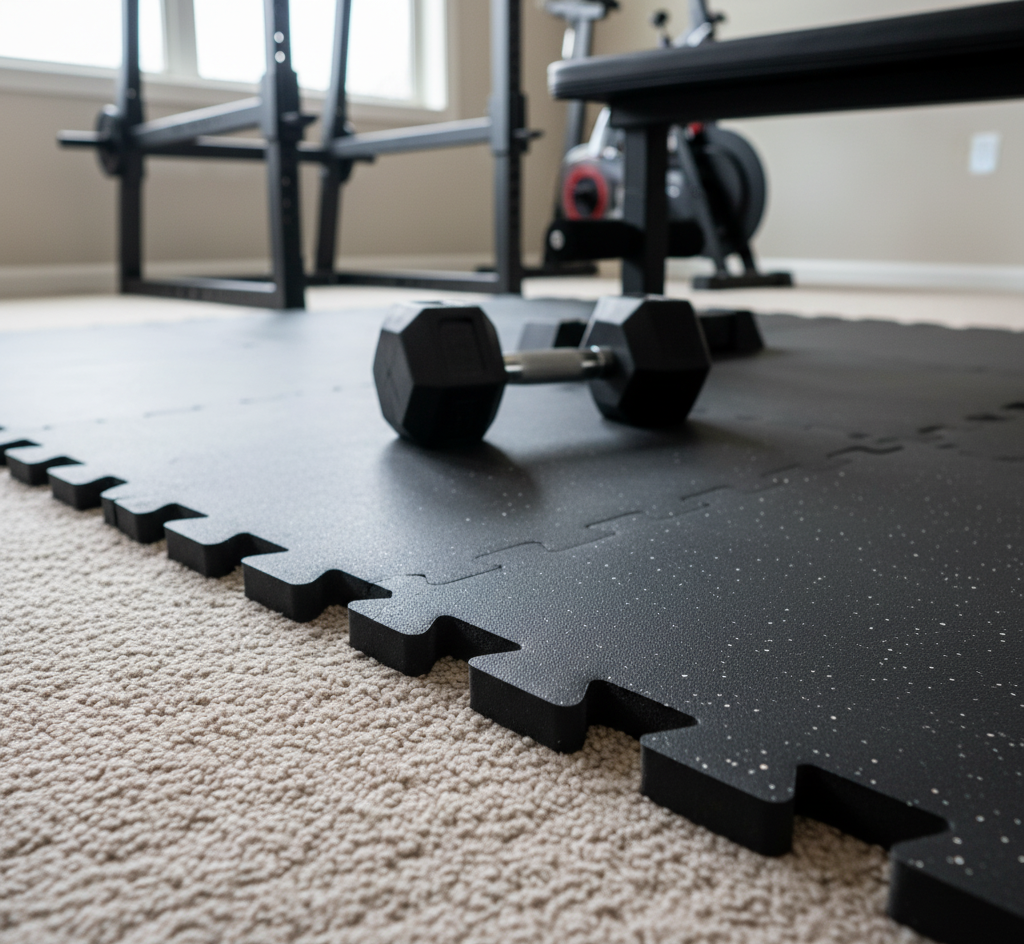
Yes, you can install rubber gym flooring over carpet—but only if you have the right carpet type and follow proper installation methods.
At Specialized Fitness Resources, we’ve installed sports flooring in fitness centers across Florida for over 28 years. We’ve learned that success depends on three factors: your carpet type, your intended use, and your installation approach.
This guide covers:
- Which carpet types support rubber flooring (and which don’t)
- Common installation problems and how to avoid them
- Step-by-step installation process
- Solutions for gyms, CrossFit studios, condominiums, and hotels
Whether you’re upgrading a condo fitness center in Miami or outfitting a university gym in Tampa, we’ll show you how to make the right choice.
Need expert advice for your project? We provide both commercial rubber flooring solutions and professional flooring installation throughout South Florida. Call us at 305-752-0451 for quotes and samples.
Let’s get into what works—and what doesn’t—when installing rubber flooring over carpet.
Also Read: Converting Your Miami Garage into a Professional Home Gym: The Complete Rubber Flooring Guide
Understanding Carpet Types for Rubber Gym Flooring Installation
Your carpet type determines whether rubber flooring installation will succeed or fail. Here’s what you need to know:
Unsuitable Carpet Types
Plush carpet creates an unstable, uneven surface that compromises flooring stability and increases injury risk. The soft, cushioned pile allows rubber flooring to shift during workouts, making it dangerous for weightlifting or high-intensity training.
High-pile carpet presents the same problems. Its thick, soft fibers cannot support heavy equipment or dynamic movements. The flooring will sink, shift, and create an unsafe training environment.
Suitable Carpet Types
Low-pile carpet provides a firm, dense surface that can support rubber flooring for moderate activities like yoga, stretching, and light cardio. The short, tightly woven fibers minimize movement and offer adequate stability.
Berber carpet works well due to its tight loop construction and minimal cushioning. This commercial-grade option creates a stable base for rubber flooring without additional preparation in most cases.
The key consideration: The denser and flatter your carpet, the better it will perform under rubber flooring. For heavy weightlifting, CrossFit training, or commercial gym use, even suitable carpet types may require a plywood subfloor layer—or complete carpet removal—to ensure proper stability and safety.
Unsure about your carpet? Our team at Specialized Fitness Resources evaluates your existing flooring and recommends the best installation approach.
Challenges of Installing Rubber Gym Flooring Over Carpet
Installing rubber gym flooring over carpet creates several critical issues that can compromise safety and performance:
Instability and Shifting
Carpet—especially plush or high-pile varieties—cannot support the weight and dynamic movement of gym equipment and users. The rubber flooring shifts during exercise, creating an unstable surface that’s dangerous for weightlifting, plyometrics, and high-intensity training.
Compression and Uneven Surfaces
Heavy equipment and repeated impact cause the carpet to compress unevenly over time. This creates dips, bumps, and sloped areas that affect equipment balance, workout form, and user safety. Treadmills, squat racks, and weight benches become unstable on compressed carpet.
Reduced Equipment Lifespan
The unstable foundation accelerates wear on both your rubber flooring and the equipment above it. Machines work harder on uneven surfaces, and the constant shifting damages flooring seams and edges.
Moisture and Odor Retention
Carpet trapped beneath rubber flooring cannot breathe or dry properly. Sweat and moisture become trapped, creating mold growth, unpleasant odors, and hygiene issues—especially problematic in commercial facilities.
The Solution: For high-pile carpet or heavy-use facilities, installing a ¾-inch plywood subfloor over the carpet creates the stable foundation rubber flooring requires. For commercial gyms, CrossFit studios, and condominium fitness centers, we often recommend complete carpet removal for optimal long-term performance.
Also Read: Comparing Horse Stall Mats and Gym Floor Mats: Which Flooring Option Best Suits Your Needs?
Preparing Your Space for Rubber Flooring Installation
Proper preparation is critical for successful rubber flooring installation over carpet. Follow these essential steps:
1. Clean Thoroughly
Remove all dirt, dust, and debris from the carpet surface. Vacuum completely and ensure the area is dry before starting installation.
2. Assess the Surface
Check for uneven areas, bumps, or dips. Significant irregularities require a plywood subfloor to create a stable, level foundation.
3. Measure and Mark
Calculate exact dimensions and mark layout lines with chalk. This ensures straight seams and minimizes material waste.
4. Acclimate Materials
Let rubber flooring adjust to room temperature for 24-48 hours before installation to prevent post-installation expansion or contraction.
5. Gather Tools and Materials
Have your measuring tape, chalk line, utility knife, straightedge, and securing method (interlocking system, double-sided tape, or adhesive) ready before you begin.
Best Rubber Flooring Options for Carpeted Areas
Selecting the right rubber flooring system for installation over carpet depends on your carpet type, usage intensity, and facility requirements. Here are two proven solutions:
Interlocking Rubber Tiles
Interlocking tiles offer the most versatile solution for carpeted surfaces, particularly over uneven or cushioned carpet.
Advantages:
- Simple installation with no adhesive required
- Easy replacement of individual tiles if damaged
- Excellent durability and slip resistance
- Made from recycled rubber for eco-friendly facilities
Heavy-Duty Rubber Mats
Rubber mats provide a quick, portable solution ideal for smaller workout areas, home gyms, or targeted equipment zones.
Advantages:
- Instant installation—simply roll out and use
- Superior shock absorption for weightlifting and high-impact training
- Non-porous surface resists moisture and bacteria
- Easy to relocate or reconfigure
Specialized Fitness Resources Flooring Options
SFR Power Tile – Premium Interlocking Gym Flooring
The SFR Power Tile is a high-performance gym flooring solution engineered for the demands of intense workout environments. Designed with the innovative Blok locking system, these interlocking recycled rubber flooring tiles ensure a secure, stable fit, eliminating movement during high-impact exercises.
Each tile measures 24” x 24” (61 cm x 61 cm) with a 2.5” thickness, offering the perfect balance of coverage, durability, and versatility for any gym layout—from commercial fitness centers to home gyms.
Also Read: Remodeling Your Gym? Don’t Overlook the Floor – Here’s Why It’s a Game Changer!
Step-by-Step Guide to Installing Rubber Gym Flooring Over Carpet
Follow this proven installation process to ensure your rubber flooring performs safely and lasts for years:
Step 1: Acclimate Your Flooring
Allow rubber flooring materials to adjust to room temperature for 24-48 hours before installation. This prevents expansion or contraction after installation, which can cause gaps or buckling.
Step 2: Assess Your Carpet and Decide on Subfloor
Evaluate your carpet type:
- Low-pile or Berber carpet: Can typically support rubber flooring directly for light to moderate use
- High-pile or plush carpet: Requires a ¾-inch plywood subfloor for stability, especially in commercial settings or areas with heavy equipment
For commercial facilities, CrossFit studios, or any heavy-use application, we strongly recommend professional installation with a plywood subfloor.
Step 3: Install Plywood Subfloor (If Needed)
For thick or cushioned carpet:
- Measure and cut ¾-inch plywood sheets to fit your space
- Lay plywood panels directly over the carpet, ensuring they fit tightly together
- Secure panels to each other (not to the carpet) if permitted in your facility
- Verify the surface is completely level before proceeding
Step 4: Add a Protective Barrier Layer
Place heavy-duty plastic sheeting between the carpet (or plywood) and rubber flooring. This barrier:
- Prevents rubber staining on carpet fibers
- Blocks moisture transfer
- Protects the underlying surface
- Makes future flooring removal easier
Step 5: Plan Your Layout
Before placing any flooring:
- Measure your space and mark center points with chalk lines
- Dry-lay your first row to ensure proper fit and alignment
- Plan seam placement away from high-traffic areas
- Account for expansion gaps along walls (¼ inch recommended)
Step 6: Install the Rubber Flooring
For Interlocking Tiles:
- Start from the center or the straightest wall
- Connect tiles firmly, ensuring interlocking edges snap completely together
- Work outward systematically, checking alignment frequently
- Cut-edge tiles to fit using a utility knife and a straightedge
For Rubber Mats:
- Roll out mats in planned positions
- Ensure edges butt together tightly with no gaps
- Trim as needed for wall-to-wall coverage
Step 7: Final Inspection and Testing
- Walk across the entire surface, checking for movement or instability
- Test with equipment in place—squat racks, benches, treadmills
- Verify all seams are tight and level
- Check that no edges create tripping hazards
- Clean the surface before use
Benefits of Installing Gym Flooring Over Carpet in Commercial and Multi-Use Facilities
For gyms, yoga studios, CrossFit boxes, schools, universities, and multi-use fitness facilities, flooring is more than just a surface—it’s a critical component of safety, performance, and overall user experience. Installing gym flooring over carpet offers numerous advantages over traditional carpet alone:
Superior Safety
Commercial fitness spaces demand surfaces that reduce the risk of slips, falls, and injuries. Gym flooring provides a stable, slip-resistant platform, protecting users during high-intensity workouts, weightlifting, and dynamic movement routines.
Exceptional Durability
Heavy foot traffic, gym equipment, and high-impact activities can quickly wear down standard carpet. Rubber or specialized gym flooring installed over carpet protects the underlying surface while withstanding years of continuous use, making it a long-term, cost-effective solution.
Impact Absorption and Comfort
Gym flooring absorbs shock and reduces stress on joints, making workouts safer and more comfortable for clients and members. Whether in a CrossFit box with dropped weights or a yoga studio with floor exercises, the cushioning supports performance while minimizing fatigue.
Easy Cleaning and Maintenance
Hygiene is crucial in high-traffic fitness environments. Gym flooring is simple to maintain—sweeping, mopping, or spot cleaning keeps spaces clean and sanitary, whereas carpet alone can trap sweat, dust, and allergens.
Noise and Vibration Reduction
Rubber and specialized gym flooring absorb sound and vibrations from dropped equipment, high-impact exercises, and foot traffic, creating a quieter, more comfortable environment for both participants and neighboring spaces.
Professional Appearance and Branding
Gym flooring transforms spaces aesthetically, offering customizable colors, textures, and designs to match branding or facility themes. A polished, professional floor enhances member experience and can reinforce a facility’s reputation as a high-quality fitness destination.
Long-Term Cost Efficiency
By protecting the carpet beneath and reducing the need for frequent replacements or repairs, gym flooring installed over carpet represents a smart investment for facility owners. It combines durability, performance, and low maintenance into a cost-effective solution.
Also Read: Why Slip-Resistant Flooring Matters for High-Intensity Training: Essential Safety Insights
Transform Your Gym Today with Professional Rubber Flooring Installation
Installing rubber gym flooring over carpet can transform your workout space, providing superior safety, durability, comfort, and aesthetics. At Specialized Fitness Resources, we’ve been helping fitness facilities across Florida achieve high-performance, long-lasting gym floors for over 28 years. From assessing your existing carpet to recommending the ideal rubber flooring system and professional installation approach, our team ensures your project delivers maximum results.
Don’t leave the safety and performance of your gym to chance. Call us today to speak with our experts, request samples, or schedule a consultation. Let us help you create a safe, durable, and professional workout environment that stands the test of time.
Frequently Asked Questions
Can rubber gym flooring be installed over carpet in home gyms?
Yes, low-pile or Berber carpet can support rubber flooring for light to moderate activities like yoga, stretching, and cardio in a home gym setting.
Does installing rubber flooring over carpet affect its warranty?
Some manufacturers have specific requirements regarding installation surfaces. Always check warranty terms to ensure coverage remains valid when installing over carpet.
What maintenance is recommended for rubber flooring over carpet?
Regular vacuuming, spot cleaning, and occasional deep cleaning with non-abrasive solutions maintain hygiene, performance, and the lifespan of both the carpet and rubber flooring.
Can I install rubber flooring over carpet in a rental property?
Yes, you can install rubber flooring over carpet in a rental property, especially if you use interlocking tiles that can be removed without damaging the underlying carpet. However, it’s essential to check with your landlord or property management before making any modifications.

 (0)
(0)